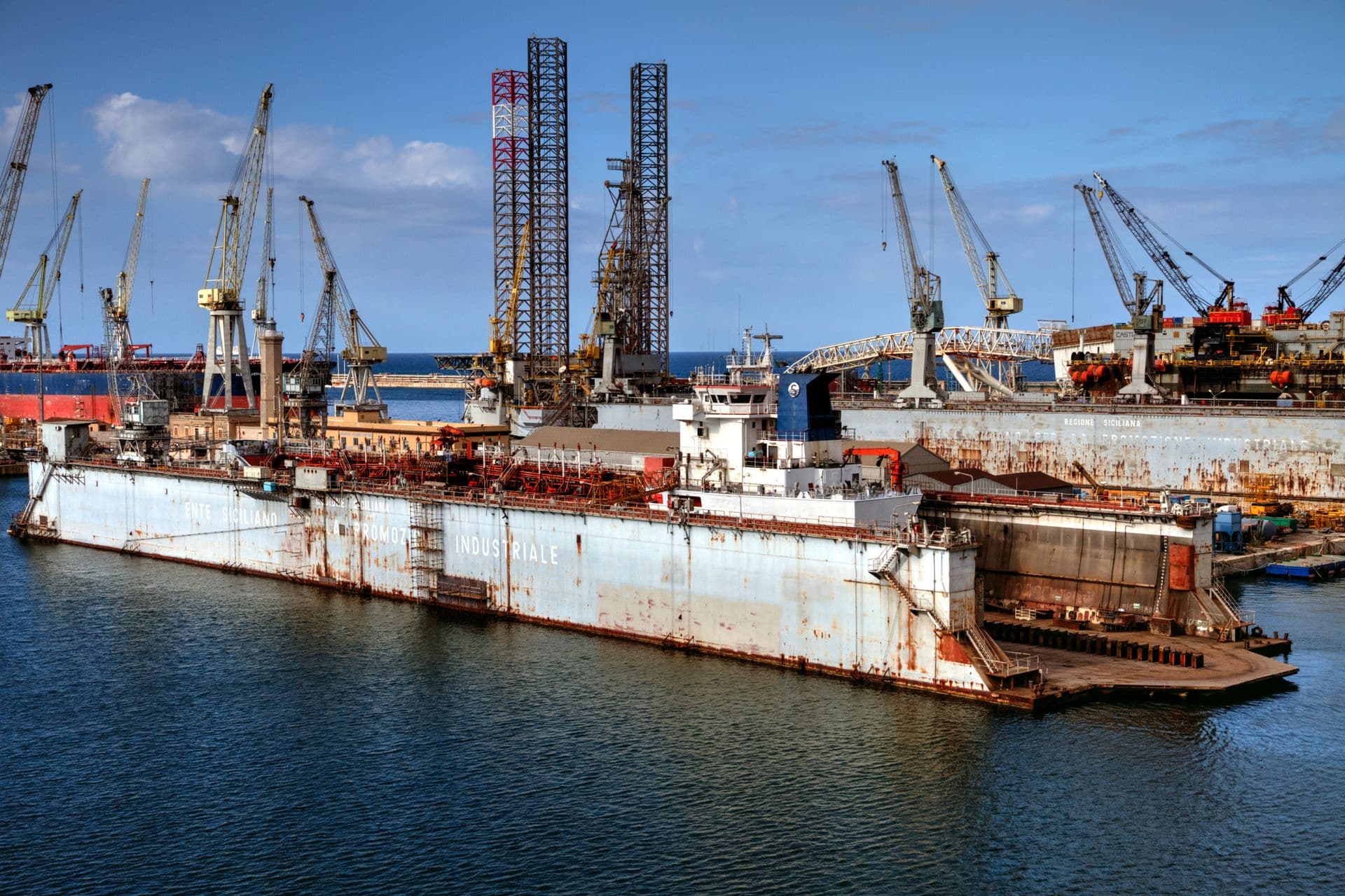
Making the world more rewarding for people who build things: Noahlogy's first employee on his passion for manufacturing
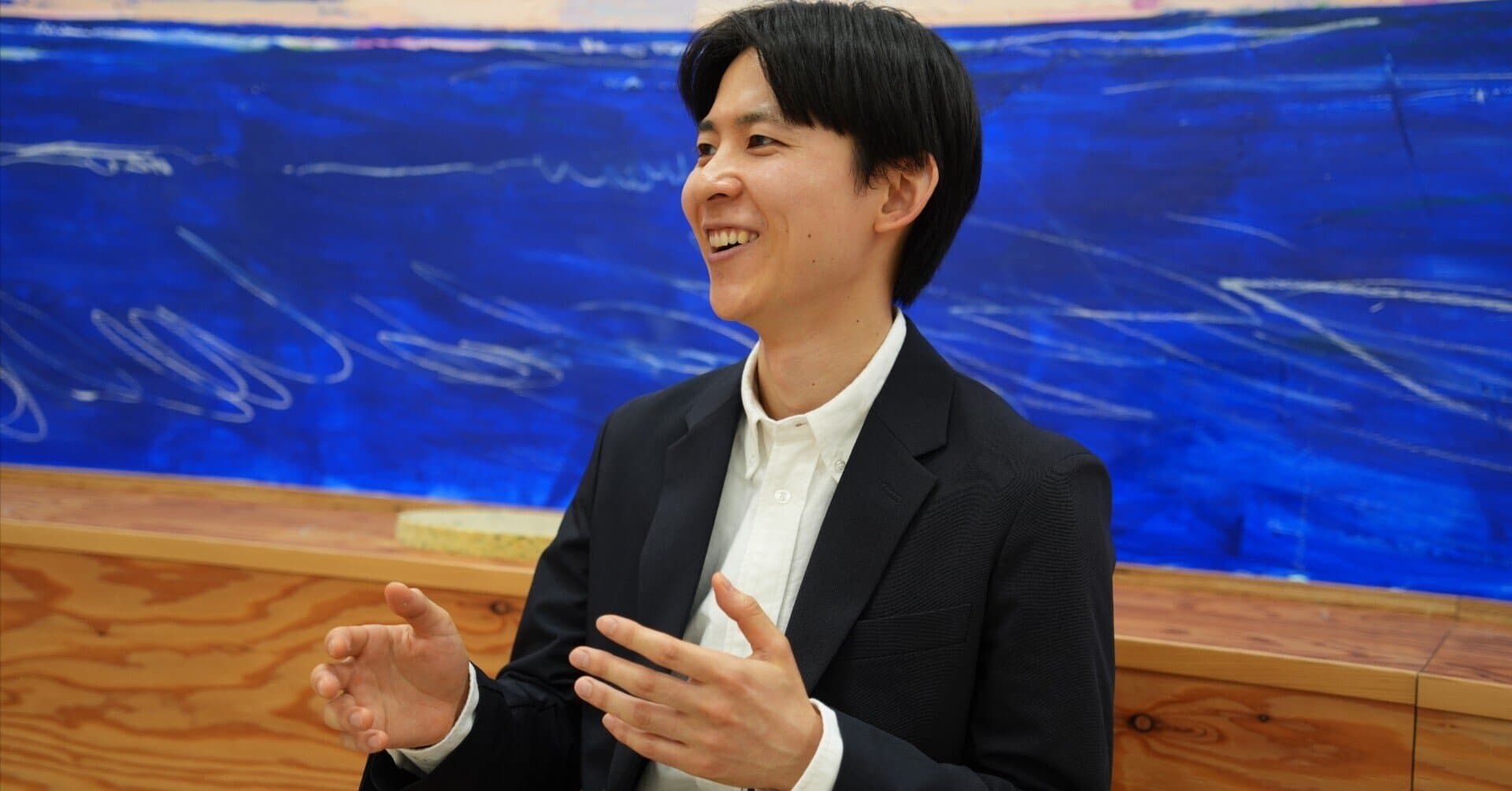
Mikihisa Yamamoto is Noahlogy's first full-time employee.
His current role is closest to customer success and product manager.
But the job you would imagine from that title and what Yamamoto actually does are different.
Yamamoto spends half of every month in the design departments of shipyards, Noahlogy's customers. What he sees there, he feeds back into the product. That is his job.
Why is he in the field that much? The reason lies in what he has been thinking about manufacturing all along.
Fascinated by how living things work, he went into robotics
Yamamoto studied robotics at the University of Tokyo's graduate school. Since childhood he has loved machines and making things. On top of that, there was an interest in living things.
"Living things are the closest thing to us, and yet we don't really understand them. Why do they move? We can move freely, but it's vague and hard to grasp. That's exactly why I found it interesting, and from there I became interested in something like intelligence."
He chose robotics as a field close to intelligence, and within it he pursued research close to biology, aiming to build a living organism from scratch. At the same time, he says his interest in software itself is not that strong.
"What I find interesting is more the part where it connects with intelligence and actually moves."
He wanted to build things that move. This curiosity would later lead him to the maritime field.
The more interesting the work, the harder it was
While doing research, Yamamoto noticed something. The more interesting the field, the more laborious work it involved.
Biology research was like that too. Cells need to be cared for, and tedious work piles up. Something that should be fascinating, and yet people leave because of how hard it is.
"Honestly, I found that sad. I wished everyone could work on genuinely interesting things while still finding them interesting."
This feeling is the starting point that connects to his work today.
At first he aimed to become a researcher. His path changed when he took a year off from graduate school to intern at a startup. There he met a veteran engineer who seemed to enjoy work every single day, someone who was always thinking about how their own work connected to society.
"I wanted a connection between my own work and society, through making things. Research is good, but I realized there are things you can only do at a company."
After graduating, he joined a major scientific instrument manufacturer and worked on developing analytical instruments.
From side job to full-time employee
He began working with Noahlogy in the fall of 2025. Introduced by an acquaintance, he joined as a side job, working online since he was living in Kyoto at the time. He says he wrote a huge number of prompts for AI.
"The project was still at the launch stage, so I was doing verification after verification just to see whether this kind of thing was even possible. AI performance was lower than it is now, so the prompts had to be carefully engineered."
After about three months of helping out, a message arrived from CEO Fukushige.
"It was a Friday, and I felt I had wrapped up a full week at my main job, when suddenly a DM came from Fukushige saying, 'I've written an offer letter, so let's have a meeting tomorrow.' I went to the meeting the next day, and he asked whether I could join Noahlogy as an employee starting the day after (laughs)."
Yamamoto accepted the offer and joined on January 1, 2026.
Asked what made the decision, he said this.
"I thought, you don't get an experience like this very often. It might be the first and last time, so I decided to take the plunge."
Words he had once heard in a lecture by a researcher also stayed with him.
"If you think it, you have to do it."
Of course there was anxiety. Still, having decided, you try it first. If it doesn't work out, you think again. He is someone who has taken on the chances that came his way, one at a time, in just that way.
The joy of building ships that are different, one by one
Yamamoto has his own view of manufacturing.
"Making something with a physical form is quite difficult, I think. So many people are involved. You build up that demanding process, and it physically reaches people. It's really hard, but I think it's a wonderful thing."
That is exactly why he wants the people engaged in that demanding work to be rewarded, and to be happy.
There is one more thing he is strongly drawn to: work that makes things that are different, one by one.
"I think one-of-a-kind products carry more added value than mass production. And that means you can deliver great value to specific users."
Ships are exactly that. Each ship has an owner, requirements, a role, and feelings behind it. Answering each one of those is Noahlogy's work.
"The value of each ship goes deep into specific people. I think that structure is really good."
In that field, Yamamoto handles customer success and product management. He stands between the development team and sales, and at the same time between the company and its customers. Moving between multiple customer sites, he is always somewhere in the field.
He describes the role expected of him this way.
Understand users' problems, and through development and operations, deliver the greatest value possible within the available effort.
Some things you only learn in the field
What is hardest about working together with customers? What Yamamoto named was drawing the line between what to do themselves and where to rely on the customer.
"There are things we simply can't do on our own, and we have to borrow the customer's strength to some extent. But if we ask the customer about everything, we put a huge burden on them. That balance has always been difficult."
He says his own rule is clear.
"First, study and look up what you don't know yourself. That's the premise. But within that, there are absolutely things you can only learn in the field. Know-how built up over many years, or customary rules, won't come out no matter how much we study. For those, we ask and have them teach us."
Look up everything you can before you go, and then ask. Because the other person can tell how much you understood before asking, the conversation connects more easily.
Asked what going to the field means, Yamamoto used the phrase "the raw atmosphere."
"If I borrow a desk at the site for a day and watch how everyone works, I can tell: this is probably where they're busy, this is the software they look at all day, they handle a lot of phone calls. It doesn't come out in words, but you can sense the problems that seep out of the atmosphere. I think that's the value of going there."
There are real examples of improving the product through observation in the field.
When they brought a newly developed feature and had people use it, it wasn't used as well as expected. Sitting beside a user and watching them operate the screen, the cause became clear. Displaying one piece of information hid another. That made the work impossible.
There was another, bigger realization.
"The assumptions of people familiar with AI and those who aren't are quite different. When they want something done, some people don't know how much, or what, they should tell the AI."
What he came up with was not to have users learn how to phrase things. If information is missing, the AI should ask back. He implemented that feature and had people use it in the field.
"They told us it was extremely convenient."
The product is still at the very beginning of development, he says. That is exactly why it has to be brought to a state where the people using it can use it as is. And what is missing to get there can only be learned in the field.
Wanting to be a force for people who work with pride
We asked what he respects about the people working on the shipbuilding floor.
"Everyone takes pride in building ships. Pride in what they themselves are doing."
The other thing he named was the look on their faces when the conversation turns to technology or craftsmanship.
"I meet many people who talk about their work with real enjoyment. As engineers, I find them wonderful and worthy of respect."
Working with these people, one wish has grown inside him.
"I believe maritime and shipbuilding is a truly wonderful industry. I hope the people involved in it can be more rewarded and live happier lives."
He also believes this cannot be achieved by the product alone.
"Rather than achieving it with our product alone, I want to realize that kind of society across the whole industry. Within that, Noahlogy wants to play the role of bringing a fresh perspective. If that becomes a stimulus and new things emerge from it, I believe the entire industry can move toward a hopeful future."
What it means to work on this team
Asked about the team's atmosphere, the answer was that there are many bright, energetic people.
"Every day, everyone finds everything interesting and gets on with it. I think that's the atmosphere here."
What he named as a distinctive feature of Noahlogy is the closeness to the management team.
"When the distance grows, the people actually doing the hands-on work and the people thinking at the top become separated. The top thinks one thing while the people below do another; that kind of gap happens easily. Here it can be prevented. If anything, we're expected to communicate in detail. That's why the whole company can move in one direction."
Asked what has changed in the nine months since joining, he said the scope of what he thinks about has widened. Rather than taking customer requests at face value, he organizes them one level up. He holds a business perspective so the company can last. He decides what not to prioritize now, for the sake of what he wants to achieve in the long term.
Finally, we asked what someone with a similar way of working could do at this company.
"There's the potential to go deep into a specific domain and build something that hits home deeply for specific people. I find that really interesting. There's also the potential for what we do to have a presence across the entire maritime supply chain and make the whole industry better. You can drive deep into a single domain. Being able to do that is a really good thing, I think."
Yamamoto is at a shipyard again today.
To create a world where people who make things are rewarded, and can work while finding it interesting.