Supporting an industry Japan is proud of, with technology: Co-founder Reiya Oishi on Noahlogy's organizational culture

Japan's maritime industry has long competed on the world stage. Noahlogy's goal is to use the power of technology and AI to lift that industry to the world's number one.
The team built to make that happen looks quite different from a typical software company. We spoke with co-founder Reiya Oishi, who leads the engineering organization, about Noahlogy's culture.
The world's best industry, still waiting for technology
Japan's maritime and shipbuilding industry holds a firm position in the world. It is recognized for both quality and technology, and ships are still being ordered from overseas today. It is one of the few areas of Japanese manufacturing that competes with the world head-on.
At the same time, the software transformation of this industry is only just beginning. In the processes that handle drawings, in procurement, and upstream in design, there is still enormous room for technology to lift things up.
"We want to push Japan's core industry forward with technology and make it the world's number one. And we want to do it in our generation."
What Oishi is looking at are the people who will work there in the future. He graduated from a technical high school in Nagasaki. Many of his classmates went on to manufacturers that support social infrastructure, and some joined the local shipyards.
"Supporting the employment of many people is an enormous social value, I think. You hungrily build revenue, and in the end that lets employees start families, buy homes, and raise children. I see real value in that."
Making tomorrow's work a little better for those classmates. Making sure that in ten or twenty years they can build a house and raise children. Noahlogy's culture is worked out backwards from this single purpose: to build a good future.
Go to the shipyard before writing code
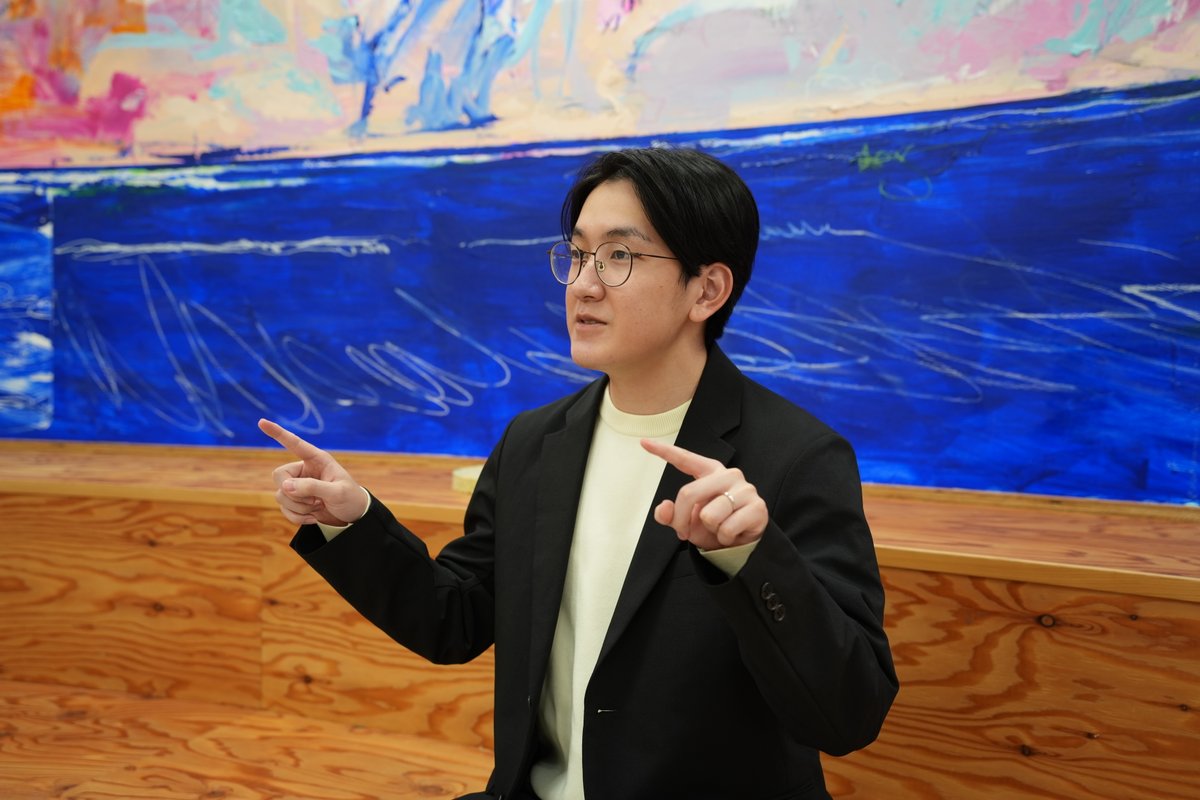
Noahlogy's engineers go out to the customer's site. Oishi himself travels twice a week, and there is hardly an engineer who has never been on a business trip.
"The idea is close to this: have our engineers semi-resident at the customer's site, let them understand the work thoroughly, and then have the engineers who understand it build the system."
When engineers debate among themselves and can't reach an answer, this is what they say to each other. Let's go on a trip next week. Let's ask directly. If asking doesn't clear it up, let's observe it ourselves.
The reason for going to the site is not to collect specifications. This industry has accumulated an enormous amount of wisdom that is not written in any document. Only someone who is physically there can draw it out.
"It's a world of duty and human feeling. A promise between people carries more weight than a written contract."
The president of one of Noahlogy's customer companies is said to spend two hours every morning walking the floor before starting his own work.
"We are working for people who take that much pride in this job. That's what makes us want to work harder."
We don't build what the customer says
Going deep into the field does not mean building exactly what you are told. The axis of judgment is consistent.
"The customer. Think from the customer's point of view. But that doesn't mean doing everything the customer says. It means understanding the customer as thoroughly as we possibly can."
Because the understanding runs deep, the proposals go further. Could this task be eliminated altogether? Could this be completed in a single operation?
"When you genuinely think about what is good for the customer, not building something becomes an option too."
Deciding for yourself what to build. For an engineer, that is the greatest discretion there is. And that discretion is given only to people who understand the field.
Complaining after it's built is against the rules
The etiquette for discussion is simple.
"Complaining after something is built is against the rules, so let's argue before we build it. Constructively, of course, but at the root it's passion. What matters is understanding the work well enough to say, 'What this person is really struggling with is this. Without this, it's meaningless.'"
This kind of discussion works because everyone has seen the field. Everyone can talk with the customer's face in mind, so even when opinions clash, in the end they point in the same direction.
Not title or seniority, but depth of customer understanding gives weight to what you say. That is what makes Noahlogy such an open place.
According to Oishi, the engineers at this company share a common formative experience. Writing an Excel macro to make a teacher's life easier. Building a game to delight their mother.
"Using technology to make people happy. Caring about the purpose, not the means. Our engineers are made of that kind of thinking."
Responsibility grows people
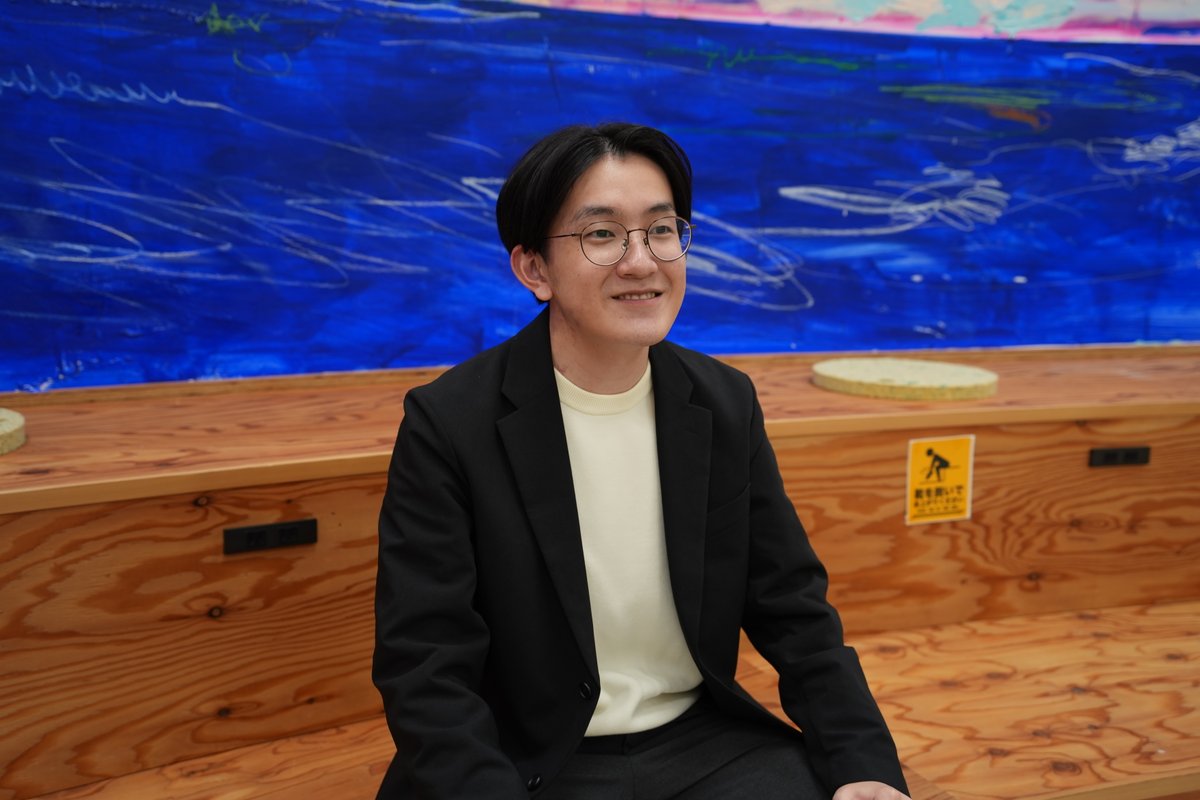
New members have contact with customers from day one. They sit in on meetings, communicate directly, and think with their own heads. There is a clear intention behind this.
"I believe that responsibility grows people. If I get too far in between, doing what I say becomes the right answer. But I make mistakes too, and then nobody can take responsibility."
That doesn't mean leaving people on their own. When they hit a hard spot, the whole team supports them with everything it has. Entrusting and supporting are designed as a set.
There is an example in the current organization of how this thinking takes shape. One engineer who joined this year was, at first, producing solid results in a setup where Oishi set the direction and the engineer implemented it. Even so, Oishi believed this person was capable of far more, and had them sit in on every client meeting.
The change showed in their words.
"Isn't this task for that person the same as this one for that other person? Is this button really necessary?"
Before long, the engineer was telling Oishi frankly, "Rather than making that process one second faster, shouldn't we prioritize this?"
"I lean toward the backend and hardware, so I think deeply about the system. He explores customer usability with fresh eyes. The moment he pushed back on me, I thought: this is healthy growth as an organization."
One engineer's word can change a management decision
Another person Oishi mentioned is the engineer who joined as the company's first full-time employee. He doesn't only write code. He stays at a customer's site for a month or two and comes back able to read every drawing. He even climbs mountains with clients on weekends.
Neither Oishi nor co-founder Fukushige can be at every site. That is exactly why they sometimes make decisions by trusting the judgment of the members who own the field.
If that person says so, let's do it. Scenes like this are by no means rare, Oishi says.
Founders changing their decisions based on a member's voice. Engineers' passion reaching management decisions directly. This closeness, too, is part of Noahlogy's culture today.
Drawing review is only the entrance
Where is this culture directed? The most advanced work right now is the detailed design review feature with shipbuilding companies. In the proof-of-concept stage, the team confirmed that drawings can be checked with 98% accuracy, and it is now in the phase of putting the feature into real operation.
But Oishi does not see this as the final form.
"Right now we are focused on shipbuilding. But we have always said our field is the maritime industry as a whole. To support this entire industry with the power of technology, we are starting with shipbuilding."
Once drawings can be reviewed, that leads to procurement. The job of inspecting drawings exists outside shipbuilding too. Further upstream, there is the basic design process that calculates a ship's length, weight, and stability.
"We are not a company that just builds an AI for drawing review. It's an AI that understands anything about ships, and the platform for it."
The wider the reach, the higher the technical difficulty. The volume of customer data the product holds is also enormous.
"Migrate while keeping everything consistent, and on top of that, keep shipping new features at full speed. We're tested on both offense and defense, and the offense has to be ferocious. We're doing things so hard that people would say, 'Don't be so greedy.' But that is what truly supports the industry."
What remains for engineers in the age of AI
This way of working fits the times we are in.
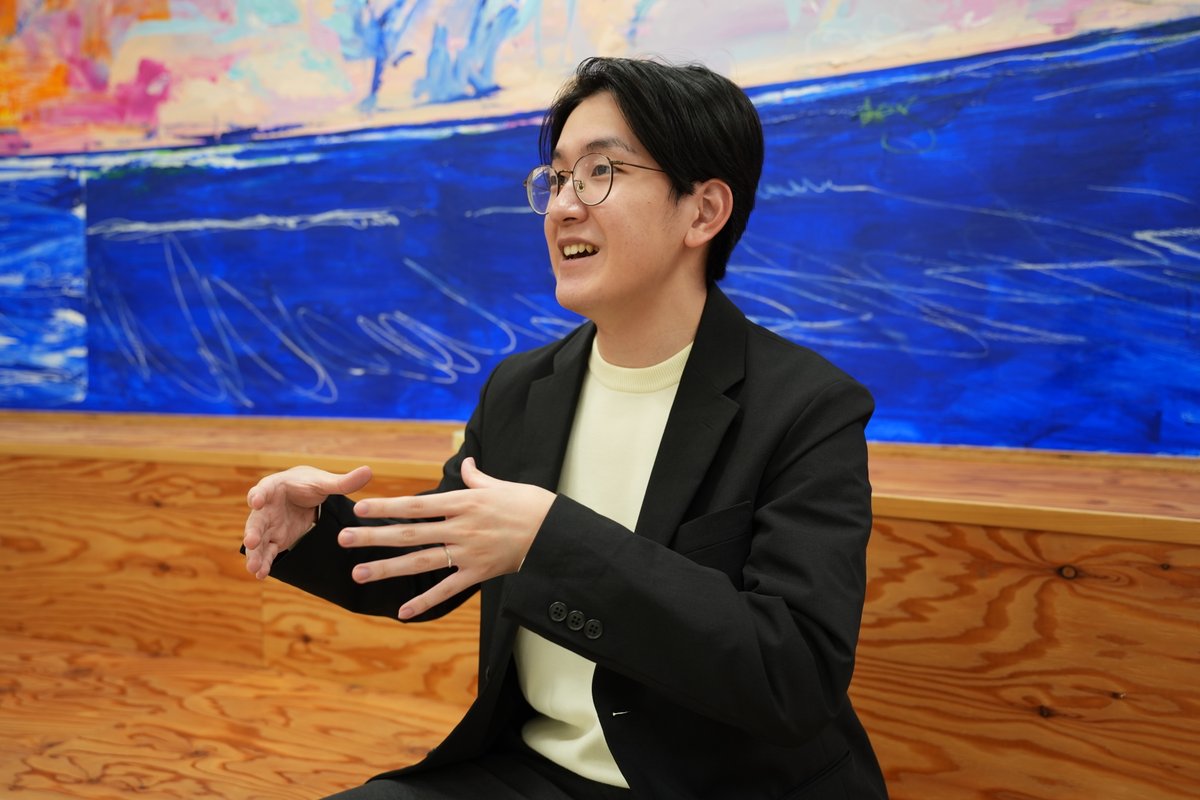
The range of coding work that AI can take on, once the specification is fixed, keeps expanding. On the other hand, standing on the shipyard floor, building trust with veteran designers, and drawing out problems that even they have not put into words: this part is still something only a human can do.
What Noahlogy asks of its engineers is both technical skill and the ability to face people. It is not a job where you can simply sit in the office and write code. Some may feel that as a burden. But at the same time, it is a path for engineers to keep their value in an era where AI is spreading everywhere.
Understand the field, decide for yourself what should be built, and shape it with your own hands. Environments that entrust you with this entire sequence are not common.
Trace where this culture came from, and you arrive at the morning meetings Oishi and Fukushige held before founding the company.
The two met on a plane to the United States. Oishi was taking part in a short program at an overseas university, and ended up talking nonstop with Fukushige, who sat next to him, from the outbound flight through the three weeks there.
"I was very confident in myself at the time, so it was a shock to meet someone smarter than me, more capable than me, and more experienced than me (laughs)."
After returning to Japan, it was Oishi who reached out. Even before starting the company, he set up a meeting every morning 30 minutes before Fukushige's workday began, and the two researched the market exhaustively.
"To put it nicely, we're of one mind and body. The way we commit is the same."
Two people who kept up frank, unreserved discussion every morning went on to build the organization as it is. The culture of arguing everything out before building, and the habit of going to the field, both begin here.
Oishi's great-grandfather was a ship designer. His grandfather's generation also took on shipbuilding-related work. He learned this only after telling his family that he was going into shipbuilding.

Will you be one of the first ten?
Finally, we asked what he would like to say to people about to take the step into a startup. This is what Oishi offered.
"Picture a company that everyone will one day know, back when it had only just started. Won't you be one of its first ten engineers?"
An industry Japan can be proud of is waiting for technology. And here is a team that will entrust you with it from the ground up.
The problems you come to understand in the field become the code you write, and in time become a ship moving across the sea. That closeness exists only at this company.